

RepMold is changing how modern manufacturing works by using smart AI technology to improve both speed and accuracy in production processes. Factories can now produce parts faster while reducing errors, which makes the entire system more efficient and reliable for businesses.
With RepMold, companies are able to save time and lower costs while also improving the overall quality of their products. It helps reduce material waste and makes it easier to handle complex designs, which is why many industries are now shifting toward AI-powered manufacturing solutions.
How Intelligent Mold Technology Is Reshaping Production Standards and Competitive Advantages
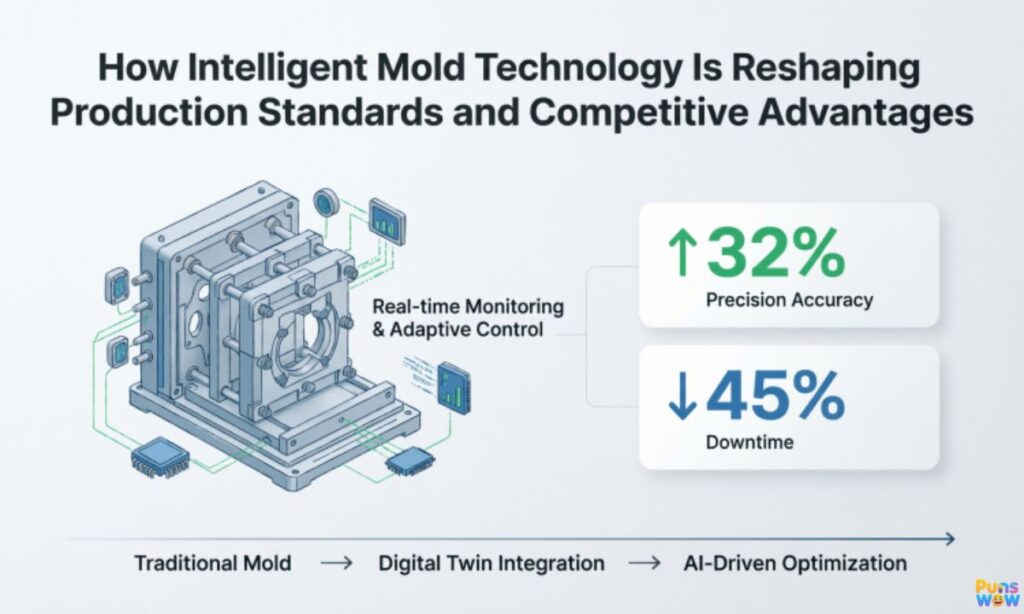
When I first encountered RepMold while researching smart manufacturing solutions, I was struck by how fundamentally different it approaches the entire mold-making process. Most traditional manufacturers still rely on methods that haven’t changed dramatically in decades, manual adjustments, repeated testing cycles, extensive trial-and-error phases. It’s like they’re still using a typewriter when everyone else has moved to computers.
RepMold, however, operates on an entirely different philosophy. It’s not just another tool added to the existing workflow. Instead, it fundamentally reimagines how molds get designed, validated, and manufactured. The combination of artificial intelligence, precision engineering, and digital replication creates something that genuinely changes the game for manufacturers serious about staying competitive.
Understanding RepMold: More Than Just Another Manufacturing Solution
RepMold represents a strategic shift toward what we call data-driven manufacturing. The core idea is beautifully simple: use intelligent algorithms and advanced simulation to optimize designs before you commit to expensive fabrication. But the execution? That’s where things get interesting.
Traditional mold making typically follows this path: design gets created, samples get made, problems emerge during testing, designs get revised, more samples get made, and finally, after weeks or months, you have production-ready molds. It’s a process built around discovering problems late rather than preventing them early.
RepMold flips this on its head. It processes complex geometric data, identifies potential stress points, optimizes material distribution, and simulates real-world performance before any physical mold ever gets fabricated. This isn’t theoretical either—we’re talking about dramatically shortened development cycles and significantly improved first-time quality rates.
The beauty of this approach is that it reduces human error without replacing human expertise. Designers and engineers still make critical decisions, but they’re working with better information and smarter tools that surface insights they might otherwise miss.
How AI Changes Everything in Mold Manufacturing
AI-Driven Design Optimization and Learning
The artificial intelligence engine in RepMold does something genuinely useful: it learns from historical production data. Every successful mold, every design revision, every manufacturing insight gets fed back into the system. The algorithms recognize patterns that would take human engineers years to discover through experience alone.
Imagine having an assistant who’s studied thousands of successful mold designs and can instantly spot when your new design has a structural weakness similar to a problem from three years ago. That’s essentially what the AI component does. It doesn’t replace engineering judgment, it augments it with pattern recognition at a scale humans simply can’t match.
Smart Simulation Before Fabrication
This might be my favorite feature. Before physical tooling begins, RepMold simulates how molds will perform under actual production conditions. It tests for thermal stress, material flow, cooling distribution, and dozens of other factors that affect final product quality.
The practical impact? Engineers can confidently move forward without the anxiety of unknown unknowns. They’ve already seen, digitally, how their design will behave on the production floor. Problems that traditionally emerged after expensive tooling now get caught in simulation, where fixing them costs almost nothing.
Precision Manufacturing: When Microns Matter
For industries like medical devices, aerospace, and automotive, tolerances aren’t suggestions, they’re absolutes. A component that’s off by even a fraction of a millimeter can fail catastrophically or render the entire part unusable.
RepMold delivers micron-level accuracy consistently. It’s not just about hitting tight tolerances once or twice, it’s about maintaining them across hundreds or thousands of production cycles. The digital optimization and precision fabrication create molds that hold specifications with remarkable consistency.
Here’s what really matters: consistency across production runs. Once a mold design is perfected and optimized, RepMold can replicate it with minimal variation. If you’re running medical device components in batch 100, those parts are essentially identical in quality to batch 1. That’s a manufacturing dream that most facilities chase but few achieve.
Accelerating Time-to-Market Without Cutting Corners
One question I get repeatedly from manufacturing professionals: Don’t shortcuts that save time end up creating quality problems,
The honest answer with RepMold is no, because it doesn’t cut corners, it eliminates wasteful steps. The system removes the trial-and-error phase by getting the design right digitally first. You’re not skipping quality checks; you’re consolidating them into the simulation phase where fixes are cheap.
For consumer electronics companies racing to market, or automotive suppliers managing complex model releases, this matters enormously. Reducing lead times from concept to production from 16 weeks to 8 weeks (a realistic improvement) fundamentally changes business competitiveness. You can respond to market demands faster. You can correct design issues more quickly. You can adjust for material availability faster than competitors still stuck in traditional processes.
Material Efficiency and the Sustainability Angle
Let me be direct: sustainability in manufacturing is no longer just philosophically nice. Major brands are demanding suppliers reduce waste. Regulations are tightening. Customers increasingly prefer products from responsible manufacturers. This is economic reality now, not corporate virtue signaling.
RepMold addresses this through intelligent design optimization. The algorithms literally optimize geometry to use materials only where structurally necessary. Unnecessary material gets eliminated. Thick sections where thin sections work fine get reduced. The result? Less material waste, lower production costs, and significantly reduced environmental impact.
The ripple effects matter too. Less material waste means less scrap, which means lower disposal costs. Optimized designs often require less energy to fabricate, which reduces operational carbon footprint. For manufacturers facing increasing pressure on sustainability metrics, this integrated approach addresses multiple goals simultaneously.
Scalability That Works From Prototype to Mass Production
One of the more impressive aspects of RepMold is how it scales. Small manufacturers doing limited production runs get access to optimization and precision that traditionally required massive capital investment. A startup developing a medical device can use RepMold for rapid prototyping without the cost structure of traditional mold-making shops that charge minimum orders.
Conversely, large-scale manufacturers get tools to reliably reproduce optimized designs across global production facilities. Whether you’re running 1,000 units or 10 million units, RepMold maintains the digital intelligence that ensures consistency and quality.
This democratization of precision manufacturing is genuinely significant. It levels competitive playing fields that traditionally favored companies with massive tooling budgets.
Which Industries Benefit Most From RepMold Technology
Automotive and Transportation: Faster component development, tighter tolerances for performance and safety, reduced rework. Tier-1 suppliers particularly benefit from the ability to quickly iterate designs and meet OEM specifications with consistency.
Medical and Healthcare Device Manufacturing: This sector has been early adopter territory. Medical devices have unforgiving tolerance requirements and extensive validation demands. RepMold’s simulation capabilities directly address these challenges. The ability to guarantee consistency across production runs matters enormously for FDA compliance and patient safety.
Consumer Electronics and Computing: Speed matters here more than most sectors. Product cycles are ruthless. Being first to market with working designs often beats being best. RepMold’s rapid iteration capability is compelling for this industry.
Industrial Equipment and Machinery: Complex metal and composite components for industrial equipment demand both precision and durability. RepMold’s stress analysis and material optimization directly serve these requirements.
Packaging and Consumer Products: For high-volume production of everything from plastic containers to cosmetic packaging, RepMold’s consistency and efficiency gains compound across millions of units.
Pros and Cons: The Honest Assessment
Advantages
- Dramatically reduced development time from initial design to production-ready molds
- Fewer design iterations because digital validation catches problems early
- Superior consistency across production runs and manufacturing facilities
- Lower material waste through intelligent optimization
- Better quality outcomes with fewer defects and rework requirements
- Flexibility for design changes with minimal retooling costs
- Reduced upfront risks by validating designs before expensive tooling investments
Honest Limitations
- Initial learning curve for teams accustomed to traditional workflows
- Software investment required including training and ongoing updates
- Data requirements mean you need comprehensive historical manufacturing information
- Not ideal for one-off or extremely short runs where setup costs matter proportionally more
- Integration challenges if existing manufacturing systems aren’t compatible
- Requires quality data in your historical production information for AI to learn properly
The limitations are real, but for most manufacturers running multiple iterations or medium-to-high volume production, the advantages substantially outweigh the drawbacks.
Practical Tips for Implementing RepMold Successfully
Start with a pilot project rather than overhauling your entire manufacturing process. Choose a product or component where you currently struggle with consistency or have lengthy development cycles. Success with a pilot builds internal support and proves ROI.
Invest in training properly. This isn’t software you just install and use. Your team needs to understand the workflow, trust the recommendations, and know when to rely on digital optimization versus human judgment. Training is an investment that directly impacts your returns.
Leverage your historical data effectively. The better and more complete your manufacturing history, the smarter the AI becomes. If your historical data is scattered or incomplete, spend time consolidating it before expecting maximum performance.
Collaborate across departments. Design engineering, manufacturing operations, quality assurance, everyone needs to understand how RepMold changes workflows and communication. Silos that made sense in traditional manufacturing often create friction in optimized systems.
Set realistic expectations on timeline. Yes, individual development cycles accelerate dramatically. But organizational implementation takes time. Plan for a 6-12 month period where you’re building capability while maintaining existing operations.
The Future State: Where Manufacturing Is Heading
Industry 4.0 wasn’t just a buzzword five years ago, it’s increasingly becoming operational reality. Manufacturers integrating digital optimization, predictive maintenance, real-time quality monitoring, and supply chain integration are outperforming those still operating semi-manually.
RepMold represents a component of this shift. It’s not the entire solution, but it’s increasingly a necessary component of competitive manufacturing. As more competitors adopt similar approaches, the competitive gap widens quickly. The manufacturers who embrace intelligent, data-driven mold technology now will find themselves significantly ahead within two years.
The trajectory is clear: precision, efficiency, sustainability, and speed are converging. RepMold addresses all four simultaneously.
Frequently Asked Questions
What specifically makes RepMold different from CAD software I already use
Traditional CAD is primarily a design visualization tool. It lets you create and modify geometry. RepMold incorporates AI-driven optimization, physics simulation, manufacturing feasibility analysis, and process optimization. It doesn’t replace CAD—it works alongside it, providing intelligence that standard CAD doesn’t attempt.
Is RepMold realistic for a smaller manufacturing facility with 50-100 employees
Absolutely. While larger manufacturers might see faster ROI through sheer volume, smaller shops often see better percentage improvements. If you’re doing any kind of custom or iterative mold work, the time and cost savings can be substantial even at smaller scales.
Does implementing RepMold mean we need entirely new equipment
Not necessarily. RepMold optimizes designs and fabrication processes, but your existing manufacturing equipment often continues to play a role. You’re improving what those machines do rather than necessarily replacing them.
How does RepMold handle complex multi-cavity molds or highly specialized designs
This is actually where it excels. Complex molds with multiple cavities, intricate cooling channels, and challenging geometry, these are exactly where AI optimization delivers the most value. Manual design for these becomes exponentially more difficult; AI handling grows more useful.
What’s the learning curve, and how long before we see real ROI
Teams usually show productivity improvements within 4-6 weeks. Meaningful ROI, where time and cost savings clearly exceed software costs and training investment, typically arrives within 3-6 months depending on your production volumes.
Is there an ongoing cost beyond the initial software purchase
Yes. Like most software, there are licensing, maintenance, and potential upgrade costs. Additionally, accessing the most recent AI improvements and features typically requires subscription or annual renewal. Budget accordingly, but compare against the operational savings you’re realizing.
Final Thoughts
Manufacturing isn’t returning to the days of simple tooling and long development cycles. Competition has moved beyond those boundaries. The companies thriving today are those actively improving precision, reducing time-to-market, and lowering costs simultaneously, and RepMold genuinely enables all three.
It’s not revolutionary in the sense of being something nobody imagined. Intelligent optimization and digital simulation aren’t new concepts. But RepMold represents the point where these concepts have matured into practical, implementable systems that create measurable competitive advantage.
If you’re managing manufacturing operations and haven’t seriously evaluated intelligent mold technology, you’re likely leaving performance on the table. Your competitors certainly aren’t ignoring it. The question isn’t whether to eventually adopt these approaches, the question is whether that happens as a strategic advantage or as catch-up playing defense.
The manufacturers who move thoughtfully but decisively toward systems like RepMold will find themselves with substantially better positioning. Better quality, faster delivery, lower costs, improved sustainability. That’s not theoretical advantage, that’s competitive reality reshaping the industry right now.

Callum is a creative pun writer with 4 years of experience in humorous blog content. He specializes in clever wordplay and viral puns, and now contributes his expertise to creating fun, engaging content at PunsWow.com.