
I still remember the first time someone texted me GTG and I had no idea what it meant. I sat there staring at my phone, wondering if it was some inside joke I wasn’t part of. So like most people these days, I immediately googled it. Turns out, it was something I’d probably heard a hundred times before but never actually knew the acronym for.
That moment made me realize how much of internet culture we absorb without really understanding the mechanics behind it. We use these tiny abbreviations every single day, sometimes multiple times per hour, yet most of us never stop to think about where they come from or why we use them.If you’ve ever felt confused by text slang, or you’re trying to keep up with how your kids communicate online, you’re definitely not alone. And honestly? That’s exactly what this guide is for.
What Does GTG Actually Mean?
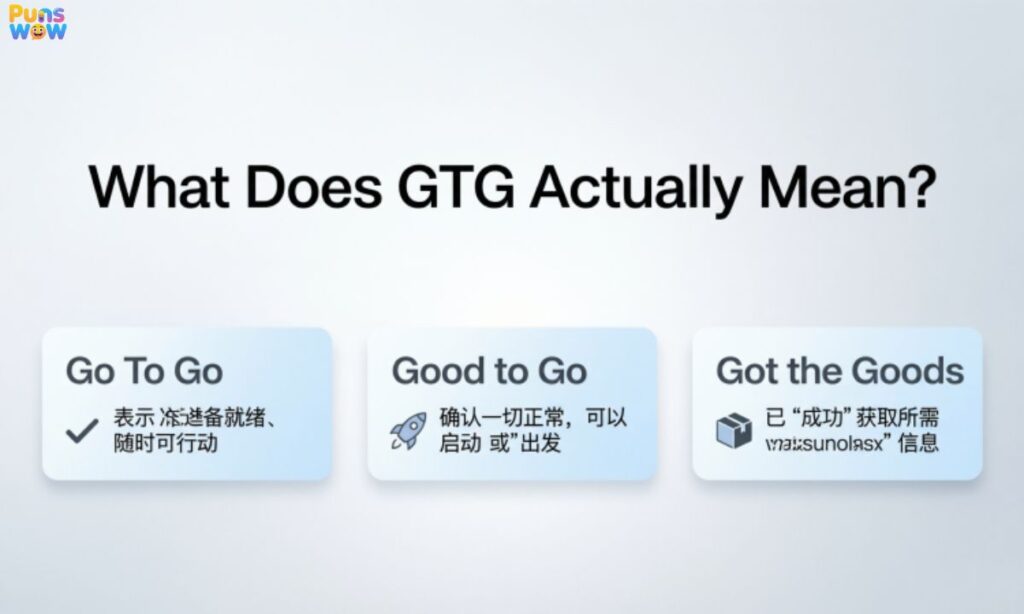
Let me cut straight to the point: GTG stands for Got To Go.
It’s about as straightforward as it gets. When someone types GTG, they’re essentially saying, I need to leave this conversation right now or I can’t keep chatting at this moment. It’s the digital equivalent of glancing at your watch during a conversation and saying, Hey, I really need to take off.
But here’s the thing, context matters. In rare situations, GTG can also mean “Good To Go,” but that’s way less common in text conversations. When you see it pop up in your chat, ninety-nine times out of a hundred, someone’s letting you know they’re heading out.
The beauty of GTG is that it’s efficient. Instead of typing out I have to go now, I’ll talk to you later, sorry for leaving suddenly, you just write two letters and three characters. It’s quick, it’s casual, and it respects both your time and the other person’s time.
The Quick Version
GTG = Got To Go = I’m leaving this conversation now
Where You’ll Actually See GTG Being Used
If you’re active online at all, you’ve probably encountered GTG in the wild. It’s absolutely everywhere in casual digital communication.
You’ll find it in:
- Text messages with friends or family members
- Snapchat chats when you’re about to lose signal or need to do something
- Discord servers during gaming sessions (especially when raid time ends)
- WhatsApp and Facebook Messenger conversations
- Instagram DMs when someone’s about to step away
- TikTok comments and DMs
- X (formerly Twitter) replies when wrapping up a thread
- Gaming platforms like Twitch chat or Xbox messaging
The common thread here is informality. GTG thrives in spaces where people are talking casually, quickly, and without any professional expectations. You’re not going to see it in a business Slack channel or a formal email thread, at least not if the person using it wants to be taken seriously.
The Tone Breakdown
This is important to understand:
✓ GTG is casual – It’s meant for relaxed situations
✓ GTG is friendly – It doesn’t come off as rude when used appropriately
✓ GTG is efficient – It respects everyone’s time
✓ GTG is social-media native – It belongs in the digital space
✗ GTG is NOT formal – Don’t use it in professional contexts
✗ GTG is NOT ideal for serious conversations – Save full explanations for sensitive discussions
Real Examples of GTG in Actual Conversations
Let me show you how GTG actually works in different chat scenarios. These aren’t made-up examples, they’re the kinds of conversations you’d see in your messages right now:
Example 1: The Sudden Departure
Friend A: Hey are you still watching the game?
Friend B: yeah but gtg soon, my roommate needs to use the TV 😅
Example 2: The Gaming Situation
Friend A: want to run another match after this?
Friend B: i’d love to but gtg in like 10 mins
Example 3: The Interrupted Hangout
Friend A: can we zoom later?
Friend B: sure, gtg now though, mom’s making me help with dinner ❤️
Example 4: The School/Work Scenario
Friend A: did you see what happened in class today?
Friend B: nah gtg but tell me later?
Example 5: The Casual Check-in
Friend A: you alive?
Friend B: barely lol, gtg to bed soon, completely exhausted
Example 6: The Promise to Connect
Friend A: okay we’re definitely hanging this weekend right?
Friend B: 100%, gtg now but I’ll call you tomorrow 😊
Notice how in each case, GTG serves as a natural breaking point in the conversation. It’s polite without being overly formal, and it usually signals that the person will be back, just not right this second.
When Should You Use GTG? (And When You Absolutely Shouldn’t)
Using GTG in the right context is like seasoning food, get it right and it enhances the experience; get it wrong and it ruins the whole thing.
Perfect Situations for GTG
Use GTG when you’re:
- Chatting with close friends – They know you and won’t take it the wrong way
- In group chats – Everyone’s used to quick exits here
- On social media DMs – This is casual territory by nature
- Gaming with people online – Super normal in gaming communities
- In casual family texts – Your siblings or cousins will totally get it
- Having a quick catch-up conversation – When the tone is already laid-back
Situations Where GTG Will Backfire
Avoid GTG when:
- Texting your boss – Your manager deserves a full, professional message
- Emailing clients – Write something like I need to step away now and will follow up soon”
- Communicating with teachers – Be respectful and spell things out
- Having an important emotional conversation – Serious topics deserve proper language
- During a professional Slack channel – Stick to professional communication standards
- Replying to someone much older – Respect differences in communication styles
- In any official or formal context – When in doubt, write it out
The general rule: If there’s any chance the person might think you’re being disrespectful or unprofessional, spell out “I need to go” instead.
GTG vs. Similar Text Slang: What’s the Difference?
Here’s where it gets interesting. GTG isn’t alone in the world of exit-strategy texting. There are actually quite a few alternatives, and each one has its own vibe:
| Slang | Actual Meaning | Best Used When | Tone |
| GTG | Got To Go | You need to leave immediately | Casual & friendly |
| BRB | Be Right Back | You’re taking a short break but coming back soon | Very casual |
| TTYL | Talk To You Later | Ending a chat but planning to reconnect | Friendly |
| AFK | Away From Keyboard | In gaming or online spaces when you step away | Gamer culture |
| Gotta run | Need to leave quickly | Slightly less slang-y than GTG but still casual | Casual |
| Bye for now | Temporary goodbye | A bit warmer and friendlier | Warm & friendly |
| Heading out | Leaving a location or conversation | Casual but a bit more formal than GTG | Semi-casual |
| Taking off | Leaving soon | When you’re about to physically leave | Natural & casual |
The differences are subtle but real. BRB implies you’ll be back quickly. TTYL is more open-ended. GTG is the most direct “I’m leaving right now option.
The Real Impact of Using Text Slang in Different Relationships
Here’s something nobody talks about, the psychology of text slang and how it affects your relationships. When you use GTG with your best friend, it might feel perfectly natural. But using it with someone you’ve just started dating? That could come across differently.
With close friends: GTG is perfectly normal and shows you’re relaxed around them
With new friends: It might feel a bit too casual too soon
With romantic partners: It depends on the stage of the relationship and how they text
With family members: Usually fine, especially with siblings
With acquaintances: Might feel a bit too informal
The thing is, text language has become part of how we signal closeness and comfort. When you use GTG with someone, you’re subtly saying, I’m comfortable enough with you to be this casual.
Common Questions About GTG (That People Actually Ask)
Does GTG always mean Got To Go
Ninety-nine percent of the time, yes. The rare Good To Go usage happens in specific contexts like logistics or emergency situations, but in casual texting, it’s always Got To Go.
Is GTG rude
Not at all, as long as you’re not in the middle of something important. The key is context and tone. An emoji or a brief explanation helps soften it if needed.
Can I use GTG with my boss
No. Write something more professional like I need to step away now.
Is GTG still popular in 2026
Absolutely. If anything, it’s even more common as texting culture evolves.
Do older people use GTG
Some do, but it’s definitely more common among younger people and digital natives.
Can GTG sound cold
Only if you use it without any context or softening language. Add an emoji or a quick sorry and it feels much warmer.
Is GTG flirty
Not inherently. The flirtiness depends on what comes before and after GTG.
Should I explain why I’m leaving
Not necessary, but a quick “sorry, my mom’s calling” makes you seem more thoughtful.
Can GTG end a conversation forever
No, it’s almost always temporary. Most people come back and pick up the conversation later.
What if I GTG and the person gets mad
They probably weren’t your people anyway. Real friends understand that life happens and you can’t text forever.
Is there a right way to use GTG
Keep it casual, add context if appropriate, and use an emoji to keep the tone warm.
Evolution of Text Slang: Where Does GTG Fit?
Text slang didn’t just appear out of nowhere. It evolved over decades as technology changed the way we communicate.
Back in the early 2000s when texting first became popular on phones with T9 predictive text, every single character mattered. People were paying per text message, and phone keypads were a nightmare. So naturally, they started shortening everything: LOL, BRB, GTG, TTYL. It was a practical solution to a technological problem.
Then smartphones came along and changed everything. You could type faster, it was unlimited texting, and suddenly the character limits didn’t matter anymore. But here’s the interesting part—we didn’t stop using the slang. In fact, we doubled down on it. Why? Because these abbreviations had become part of our digital culture and identity.
GTG stuck around because it’s useful. It serves a real function in conversation, it provides a natural exit point that’s quick and universally understood. Even with unlimited texting, we still use it because it feels right, it’s efficient, and it maintains a particular tone in conversations.
Practical Tips: How to Use GTG Without Sounding Awkward
If you’re new to using GTG or you’re not sure whether it fits your communication style, here are some practical tips:
1. Know Your Audience First
Before you use GTG, think about the person you’re texting. Are they the type who texts casually? Do they use abbreviations themselves? If so, GTG is fair game.
2. Add Context When Possible
Instead of just “gtg,” try “gtg, work meeting! or gtg, talk later.” The extra context makes it feel less abrupt.
3. Use an Emoji to Soften the Blow
An emoji changes everything. gtg 😅 feels warmer than “gtg” by itself.
4. Don’t Overuse It
If you GTG three times in a single conversation, it might actually frustrate the other person. Save it for when you truly need to leave.
5. Circle Back Later
If it was an important conversation, follow up with the person later. This shows you value the connection even though you had to leave suddenly.
6. Match the Energy of the Chat
If someone’s sharing something heavy or emotional, spelling out “I have to go, but I’ll call you later” is better than just gtg.
7. Consider the Time Difference
If you’re texting someone in a different timezone and GTGing means they won’t see your message until tomorrow, acknowledge that in your message.
Final Thoughts
At first glance, GTG seems like such a small thing. It’s just three letters. But it actually represents something bigger about how we communicate in 2026.
We’re all busier than ever. We’re juggling multiple conversations, work commitments, personal obligations, and trying to maintain our mental health on top of it all. In this chaotic landscape, GTG serves a real purpose. It’s a way to be honest about our availability while still being friendly and respectful.
Using GTG says, “I value this conversation and I value you, but right now I literally cannot continue. I’ll be back though.” It’s permission to step away without guilt.
The people who matter to you won’t judge you for GTG. They’ll understand that life happens, schedules are crazy, and sometimes you have to dip out of a conversation quickly. And the people who do judge you for it? They probably aren’t worth your time anyway.
So next time you find yourself needing to leave a chat, go ahead and GTG. Your conversation partners will appreciate the honesty, and you’ll appreciate the time to handle whatever’s actually calling you away. That’s the real meaning behind these three letters, respect for time, honesty about availability, and the understanding that life is messy and complicated.

Callum is a creative pun writer with 4 years of experience in humorous blog content. He specializes in clever wordplay and viral puns, and now contributes his expertise to creating fun, engaging content at PunsWow.com.