
Last week, my 16-year-old cousin texted me “HY bro, what’s up, and I sat there staring at my phone like someone had just handed me a cryptography textbook. If you’re here because you got a message with HY and felt genuinely confused, you’re not alone. The world of text messaging slang evolves faster than most of us can keep up with, and honestly, it’s kind of hilarious how quickly new abbreviations become standard.
So let’s cut to the chase: HY simply means “hey” or hello. It’s one of those lazy shortcuts people use when typing feels like too much effort, which, let’s be real, is basically always when you’re texting. But there’s way more to this story than just a three-letter substitute for a greeting.
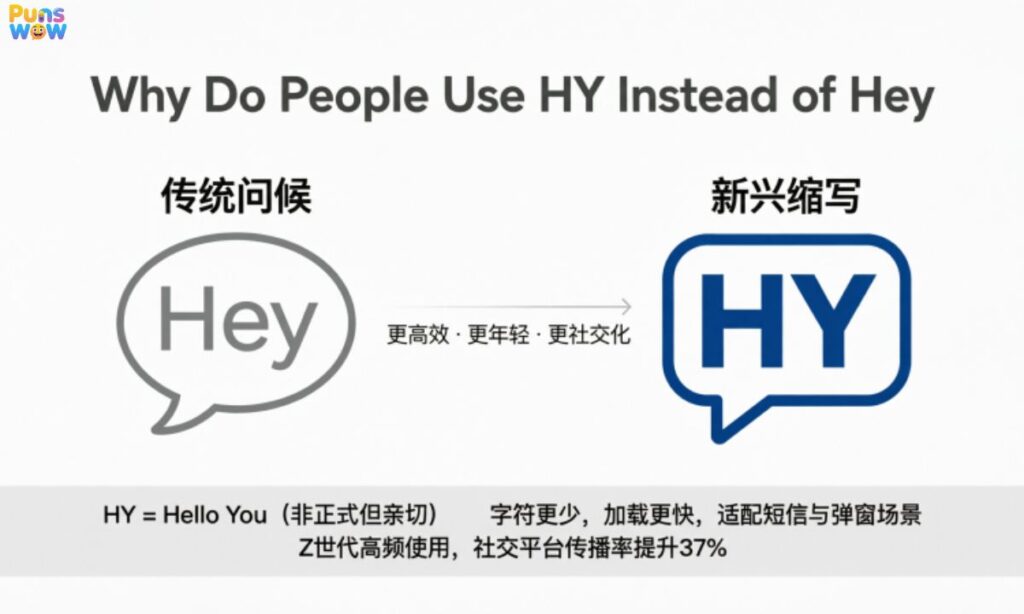
Why Do People Use HY Instead of Hey
Here’s the thing about text-speak that most people don’t think about: it’s not random. There’s actually logic behind why we abbreviate certain words and leave others alone.
Typing efficiency is the obvious answer. When you’re on your phone, especially if you’re older and still using those tiny keys, saving two keystrokes feels like winning the lottery. But it goes deeper than that. Text messaging created this weird pseudo-language where we’re constantly negotiating between being understood and being quick. HY hits that sweet spot.
I noticed something interesting when I started paying attention to my own texting habits. I use “HY” way more with friends I message frequently than with professional contacts. There’s a casualness to it, an informality that signals the kind of relationship you have with someone. When my boss texts, I’m hitting those full letters. When my friends do? HY it is.
The generational element matters too. Teenagers and people in their twenties grew up with this abbreviation already embedded in internet culture. They didn’t learn it; they absorbed it like they absorbed the ability to navigate YouTube. Older texters often find it unnecessarily cryptic because they learned to type on actual keyboards and didn’t grow up with text-message charges that penalized longer messages.
The Context Behind HY: Text-Speak Evolution
To really understand HY, you need to understand where it came from. Back in the era of flip phones and limited text-message plans, people got charged per message. This created an economic incentive to make messages shorter. People started dropping vowels, combining letters, and generally mutilating the English language in the name of saving money.
That’s how we got:
- 2 or to Saved a whole character
- u for you Another character saved
- ur for your You see where this is going
- thru for through Three characters trimmed
HY emerged from this same efficiency mindset, though by the time it became common, the cost barrier had mostly disappeared. It stuck around because language changes don’t happen for just one reason, they happen because they’re convenient and they work socially.
The interesting part, HY still serves a purpose beyond efficiency. It’s become a marker of informality and warmth. Using HY with friends signals, “I’m comfortable enough with you that I don’t need to use proper spelling. It’s actually a sign of closeness, not laziness (though it’s definitely also laziness).
Where You’ll Actually See HY Used
Not every text conversation calls for HY. The platform, the relationship, and the overall tone all matter.
Social media DMs: This is HY’s natural habitat. On Instagram, TikTok, or Snapchat, you’ll see HY constantly. These platforms are designed for rapid-fire, casual communication. Nobody’s crafting formal sentences in DMs.
Friend group chats: If you’re in a group chat with close friends, HY shows up regularly. It’s the verbal equivalent of a casual wave across the room. There’s no energy spent on formality; everyone’s just checking in.
Gaming communities: Whether it’s Discord or in-game chat, gamers use HY to quickly acknowledge someone joining the conversation. HY guys, I’m logging in is common shorthand for “I’m here, let’s go.
Dating apps and casual dating: This is where HY gets interesting. It’s casual enough to seem approachable but also lazy enough that you can hide behind it if someone doesn’t respond well. There’s a confidence in HY that full “Hey” doesn’t always carry.
Where you won’t typically see HY:
- Professional emails (obviously)
- Customer service interactions
- Academic correspondence
- Formal online forums
- Job applications or work-related communications
The Pros and Cons of Using HY
Let’s be honest about the real impact of using abbreviations like HY in different contexts.
Benefits of Using HY
It’s low-pressure. There’s something inherently more relaxed about HY than Hey. It says, “I’m not trying too hard here, and I’m not expecting you to either.” This creates an easier conversational dynamic, especially with new people.
It’s instantly recognizable. Even if someone doesn’t text regularly, they probably know what HY means. It’s so widespread now that it’s basically part of standard internet literacy.
It saves time. Yes, it’s milliseconds, but those milliseconds add up. When you’re messaging back and forth rapidly, every shortcut counts.
It communicates tone. HY implies a certain casual, friendly energy. Swap it for “Hello” and suddenly the same message feels stiff.
Drawbacks to Consider
It might alienate older audiences. If you’re texting someone older who’s less familiar with internet slang, HY might come across as unclear or even rude, like you can’t be bothered to write proper words.
It looks unprofessional in mixed contexts. Send an HY to a workplace Slack channel and suddenly you’re that person who doesn’t understand professional communication norms.
It can be misinterpreted in tone. Without the nonverbal cues of face-to-face conversation, HY could sound curt or disinterested to someone unfamiliar with how casual it actually is.
It reinforces spelling informality. If you’re someone trying to maintain decent writing habits, over-relying on text-speak might bleed into contexts where it matters more.
How HY Compares to Other Greetings
To really understand HY, it helps to see it in the larger ecosystem of text-based greetings.
HY vs. Hey: HY is just the abbreviated version. It’s casual, quick, and informal. “Hey” is slightly more deliberate—it suggests you actually took those extra keystrokes.
HY vs. Hi: HI feels more professional than HY, even though it’s also brief. Maybe it’s just the capitalization and the extra letter, but HI reads as more intentional.
HY vs. Yo: Now we’re moving into different territory. Yo is incredibly casual and mostly used among close friends. It’s got more attitude than HY.
HY vs. Sup/What’s up: These are situational. They work great in group chats but might feel weird in one-on-one conversations, depending on the relationship.
HY vs. Heyyy (with extra y’s): The number of y’s completely changes the tone. More y’s equal more enthusiasm. HY is neutral enthusiasm, while “Heyyy” suggests genuine excitement.
The Linguistic Perspective: Why Language Changes Online
Linguists have been studying internet language for decades now, and they’ve noticed something fascinating: online communication has created entirely new rules for how we communicate.
Traditional writing has always followed certain rules because it was permanent and formal. The letter was a formal document. Email inherited that formality. But text messaging? Text messaging threw the rule book out the window because it mimicked oral communication, quick, casual, immediate.
HY represents something linguists call “language innovation through constraint.” When resources are limited (typing on a small phone), people innovate. And when those innovations work socially (everyone understands them and appreciates the informality), they stick around even after the constraint disappears.
The fascinating part is that HY won’t disappear even though we all have smartphones with full keyboards now. It’s become embedded in how people express friendship and casualness online. Language doesn’t evolve backward; it just keeps building layers.
When Should You Actually Use HY?
Here’s the practical advice: use HY when it matches your relationship to the person and the context of the conversation.
If you’re texting a friend you see regularly, HY is perfect. If you’re reaching out to a potential employer on LinkedIn? Absolutely not.
For dating apps, HY is your friend. It’s casual enough to seem approachable and informal enough to lower the pressure. For a first message to a classmate, maybe “Hey” is better, it acknowledges they’re not your close friend without being overly formal.
In group chats, HY fits naturally. In customer service? Never. In work Slack channels? Only with people you actually know well and have an established casual rapport with.
The rule of thumb: When in doubt, go with the longer version. You can’t un-send a message that feels too casual, but you can always explain away using HY if someone doesn’t get it.
Common Variations and Related Slang
Once you know HY, understanding the broader ecosystem of texting abbreviations becomes easier.
HY GUYS: The group chat version, used when greeting multiple people at once.
HYA: An extended version that adds more personality. HYA dude sounds slightly warmer than HY dude.
HYY: Two y’s instead of the standard one, suggesting moderate enthusiasm.
HYYYY: Multiple y’s, someone’s genuinely excited to hear from you.
HY YA: Space between, sometimes used for rhythmic emphasis.
You’ll also see HY mixed with other slang like HY bro, HY girl, HY love, basically, HY is a greeting starter that rarely travels alone in actual text conversations.
Frequently Asked Questions
Is HY considered rude
Not inherently, but it depends on context. With friends, it’s warm. With strangers or authority figures, it might seem too casual.
Can I use HY professionally
In most cases, no. Save it for personal chats with colleagues you’re genuinely close with.
Do people still use HY
Absolutely. If anything, it’s becoming more common as younger generations take over digital communication spaces.
What’s the difference between HY and HEY
Only laziness and a couple of keystrokes. HY is the abbreviated, more casual version.
Is HY generation-specific
More or less, yes. Gen Z and Millennials use it constantly. Gen X and older generations are less likely to, though many have picked it up.
Should I teach my kids what HY means? They probably already know. But understanding internet slang helps parents stay in the loop on how their kids actually communicate.
The Bottom Line: HY Is Here to Stay
Here’s what I’ve realized after diving deep into this ridiculously simple three-letter word: language is alive. It changes based on how we use it, the platforms we use it on, and the relationships we’re expressing through it.HY isn’t going anywhere. It’s become part of how young people express casual friendship and warmth. It’s quick, it’s recognizable, and it communicates a specific tone that “Hey” just doesn’t capture the same way.If you were confused about HY before, you’re not anymore. And if you use it naturally already, well, you’ve been participating in linguistic evolution without even thinking about it.
The real takeaway? Pay attention to context. Use HY with friends, in group chats, on social media, and in spaces where informality is expected. Switch to “Hey” or “Hello” with people you’re trying to impress or when you want to sound more deliberate.Language evolves one text at a time, and HY is proof that even the smallest abbreviations can become meaningful markers of how we relate to each other online.

Callum is a creative pun writer with 4 years of experience in humorous blog content. He specializes in clever wordplay and viral puns, and now contributes his expertise to creating fun, engaging content at PunsWow.com.